"We're all minor characters in someone else's story." -Unknown
In class, we read "This is Water" by David Foster Wallace, who posits that our "default setting" is self-centered and self-seeking. He uses stream of consciousness to emulate a daily experience, and it's uncannily accurate. I know I've been guilty of thinking that way, especially after a long day at school. How can we all think of other people as nuisances, even as they're thinking the same thing?
From birth, you can only experience life from one perspective--your own. We are not born as omniscient narrators, able to view and comment on the thoughts of others (which would make socializing so much easier). All we know is our own psyche. This is part of the reason why "simple awareness" is so difficult to maintain; it's hard to consider others when we're so used to providing for ourselves above all else.
Selfishness is hardwired into our systems. Our ancestors competed to survive, just as we now compete to be successful. People fight for fame, wealth, power, you name it. The nature of this competition demands selfishness: for every winner, there must be losers. We're easily blinded by our goals, too busy working to notice the plight of others. It's not uncommon to see hundreds, thousands of people walking by a beggar without giving a second glance.
The term theory of mind refers to the capacity to empathize. It's quite possibly the most valuable gift humans have--it allows for strong connections to be made between individuals. Theory of mind is what separates us from the rest of the animal kingdom. It's what David Foster Wallace is talking about, taking the time to truly care about others. It's a shame that we're not using it to it's full extent.
On a more positive note, a relatively recent photography movement has sprung up: Humans of New York. Brandon Stanton's work captures snapshots of people we'll never meet, providing a glimpse of their life stories. It really makes you think about the people you meet every day. What if there's more to "the guy who wears funny hats," or "the guy who sits behind me in chemistry?" This is a step in the right direction; it's this kind of art that really brings out the best in humanity.
Sunday, October 27, 2013

Sunday, October 20, 2013
Bananappeals

Did you know that bananas are naturally slightly radioactive (thanks to their potassium content), but the level of radiation is not high enough to cause harm?
Jokes aside, appeals are largely responsible for the power of language. They can make the reader question previously held beliefs or solidify them. As we've seen from reading historical documents in class, early American writers used appeals to great effect.
Patrick Henry used a variety of arguments in his speech; he mixed logical evidence with loaded language such as "insidious," "delusive," and "invincible." Integrating the abstract and the concrete served to make both more effective--readers are more likely to accept his rational evidence after being softened by his emotional appeal, and the evidence makes the emotional appeal seem more logical. In addition, his use of rhetorical questions guided the audience's thinking throughout the speech. This combination of tactics served to stir the hearts of many.
Appeals, however, can also be considered manipulative depending on how they're used. Emotional appeals are especially dangerous because they don't require any evidence. People should be critical of speeches and causes that rely solely on emotional appeal to gain supporters. This is exemplified by the advertisements that deluge us today; organizations like PETA attempt to guilt-trip viewers instead of providing factual information.
"The trouble with having an open mind, of course, is that people will insist on coming along and trying to put things in it." -Terry Pratchett
Sunday, October 13, 2013
The Effects of Refrigeration on Hippopotamuses
Names make an impact on what we expect from something or someone.


Depending on the context of a situation, names can be viewed in different ways. Reputation tends to be tied up with names, especially in The Crucible, because a name is how society identifies an individual. Your name is a label that encompasses everything you've done publicly. Since only public actions will affect your reputation--and hence your name--people who are eager to inflate their stature often try to publicize every good deed while concealing incriminating events. This behavior is clearly evident in Salem; everyone from Abigail to Reverend Hale is concerned about defending their reputation. Proctor is even willing to die in order to keep his name in the town unblemished.
On the other hand, reputation doesn't mean much if you've only just met a person. After learning a stranger's name, people tend to make snap judgements about the person based on several factors.
- Meaning
- Prior experience
- Stereotypes or associations
Sunday, October 6, 2013
Baa, Baa, Black Sheep
This week in class, we read The Crucible, a play by Arthur Miller about the hysterical atmosphere of the Salem witch trials. Again, we see the power of mob mentality at work. With all the discussion of social dynamics we've been having lately (stereotyping, power of the individual, etc.), it seems like I accidentally signed up for a psychology course, but I digress.
Proctor, the tragic hero of the play, is somewhat of an anomaly in the town of Salem. He doesn't participate in petty squabbles over land like the rest of the townspeople, and is "respected and even feared in Salem" (144). Naturally, people feel threatened and consider him (albeit behind his back) an outsider; you might say he's a black sheep.
In psychology, the black sheep effect refers to how individuals in a group view other members. Proctor and the townspeople belong to one big group of Salem residents, but Proctor is a bit of a deviant; he doesn't conform to society and so becomes a separate outgroup. When the witch trial frenzy begins, Abigail's coterie go after anyone they believe is different (those in the outgroup) under the pretense of religion. People between the inner and outer groups are caught up and tend to comply with the group, even if they are privately opposed to the group's actions. All it takes is one ringleader--Abigail--and everyone goes nuts because, well, everyone else is going nuts, so they should too, right? This effect is only compounded by the Puritan obsession with reputation. Once the wheel has been set in motion, it cannot be stopped. As Danforth says, "reprieve or pardon must cast doubt upon the guilt of them that died till now" (201).
The articles we read show that this attitude of witch-hunting is still very much alive today, from Communist teachers to literal witch hunts in third-world countries.

O'Brien put it best in The Things They Carried: "I was a coward. I went to war."
Proctor, the tragic hero of the play, is somewhat of an anomaly in the town of Salem. He doesn't participate in petty squabbles over land like the rest of the townspeople, and is "respected and even feared in Salem" (144). Naturally, people feel threatened and consider him (albeit behind his back) an outsider; you might say he's a black sheep.
In psychology, the black sheep effect refers to how individuals in a group view other members. Proctor and the townspeople belong to one big group of Salem residents, but Proctor is a bit of a deviant; he doesn't conform to society and so becomes a separate outgroup. When the witch trial frenzy begins, Abigail's coterie go after anyone they believe is different (those in the outgroup) under the pretense of religion. People between the inner and outer groups are caught up and tend to comply with the group, even if they are privately opposed to the group's actions. All it takes is one ringleader--Abigail--and everyone goes nuts because, well, everyone else is going nuts, so they should too, right? This effect is only compounded by the Puritan obsession with reputation. Once the wheel has been set in motion, it cannot be stopped. As Danforth says, "reprieve or pardon must cast doubt upon the guilt of them that died till now" (201).
The articles we read show that this attitude of witch-hunting is still very much alive today, from Communist teachers to literal witch hunts in third-world countries.
O'Brien put it best in The Things They Carried: "I was a coward. I went to war."
Sunday, September 29, 2013
Historical Revolution
“History doesn't repeat itself, but it does rhyme.” ― Mark Twain
As much as people like to declare themselves as progressive, open-minded thinkers, society as a whole hasn't changed much from colonial times. In fact, in some ways it seems to have regressed. The literature of colonial times we read through was surprisingly familiar. It was the same stuff we see today--journals and love letters, religious sermons and oppressed minorities. We've collected a few fancy new toys along the way, but the same questions and themes are still relevant. It's ironic how Americans, after freeing themselves from British "tyranny," turned around and started keeping slaves. Equiano wrote to inform the world of its cruelty. Although not as severe, didn't proponents of same-sex marriage and women's rights have similar goals? As for Jonathan Edwards' "Sinners in the Hands of an Angry God," the basic message is still relevant today, if not more so. He'd probably have a heart attack if he saw something like the recent VMA's. The present may not be a carbon copy of the past, but they do share similarities.


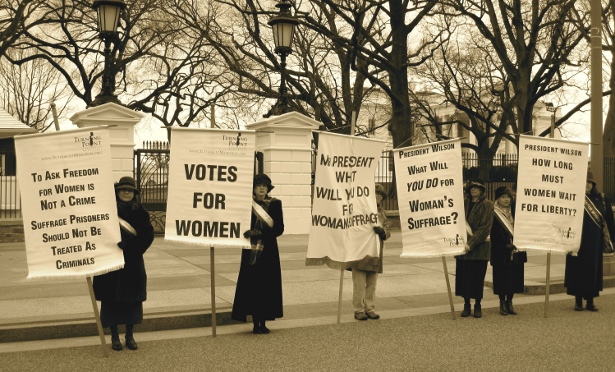

It seems that human nature is hard to change, for all of our technology and education.
“But here's some advice, boy. Don't put your trust in revolutions. They always come around again. That's why they're called revolutions.”
― Terry Pratchett, Night Watch
Sunday, September 22, 2013
Moore's Paradox
It never really occurred to me to question how nonfiction writers created such detailed accounts of a situation. That isn't to say that it makes sense to me; I just didn't think about it. I knew, on some level, that parts of The Glass Castle were fabricated; however, I read it as if it were completely true. It's an interesting paradox, how it was possible for me to believe (against logic) that everything Jeannette said was factual. It's like doublethink in 1984 almost, knowing something is both fiction and truth. Jeannette's memoir served its purpose in the end though, didn't it? It was an entertaining read and a fascinating account of her childhood.
How much fiction is acceptable in a "nonfiction" book?
On one hand, we have The Glass Castle, with minor(?) fictional filling-in. On the other hand, we have James Frey, with the vast majority of A Million Little Pieces made up. And on a third hand, we have metafictional like The Things They Carried, which claims to be both truth and fiction. Where does the actual truth come in? What exactly is truth?
Nonfiction books and documentaries probably wouldn't be very interesting to read without a storyline. In fact, I think those are called textbooks. So whether it's Sherman Alexie publishing fiction with rooted in truth or Tim O'Brien publishing truth rooted in fiction, it all comes down to pretty much the same purpose: a better understanding of the world.

How much fiction is acceptable in a "nonfiction" book?
On one hand, we have The Glass Castle, with minor(?) fictional filling-in. On the other hand, we have James Frey, with the vast majority of A Million Little Pieces made up. And on a third hand, we have metafictional like The Things They Carried, which claims to be both truth and fiction. Where does the actual truth come in? What exactly is truth?
Nonfiction books and documentaries probably wouldn't be very interesting to read without a storyline. In fact, I think those are called textbooks. So whether it's Sherman Alexie publishing fiction with rooted in truth or Tim O'Brien publishing truth rooted in fiction, it all comes down to pretty much the same purpose: a better understanding of the world.
(Garfield would not be quite as funny if it were true)
Sunday, September 15, 2013
Godwin's Law
How much power does an individual wield?
The Adventures of Huckleberry Finn
Everyone is, by definition, an individual. Why then, does a group of individuals behave so differently? It seems only logical that a larger number of people could achieve more. In practice, however, the social and intellectual bottlenecks that arise actually make groups less efficient.
Individuals have more potential than most people realize.


One recurring theme in The Adventures of Huckleberry Finn is racism. Many of the characters are racist simply because that's how they were raised. Aunt Sally, for example, disregards the black man that was killed in a steamboat accident. She casually states that "sometimes people do get hurt" (223). Aunt Sally is by no means a vicious person; she's just behaving how everyone else is behaving. The feud between the Shepherdsons and the Grangerfords is a similar situation. Buck dies without even knowing why he was fighting. Colonel Sherburn's speech exemplifies the kind of mob mentality that is so prevalent in the novel. He scornfully disperses the crowd, knowing that most are "afraid [they'll] be found out to be what [they] are—cowards" (149). Sherburn is able to think clearly because he's not caught up in the mob.
Throughout history, there have been people who profoundly impacted the world, for good or evil. Their names are still common knowledge today--Martin Luther King, Abraham Lincoln, Alexander the Great, Adolf Hitler, Albert Einstein. Very rarely, if ever, is a group remembered the same way. It's always been individuals whom the world has immortalized. Godwin's Law states that the longer an online discussion lasts, the higher the chance that Hitler is brought up. This is a testament to how an individual can affect the lives of many, although in this case we would have been better off without his influence.
1984 and Brave New World, two dystopian novels, both depict the general public as mindless subjects, subject to the laws and regulations of higher powers. The point Orwell and Huxley make is that groups are easier to control than individuals, as shown by Big Brother's ruthless treatment of Winston.
The individual wields power because they aren't bound by social rules or obligations. Individuals are free to innovate and/or act on convictions without having to worry about what others will think of them. They are usually the people heading a group and creating change.
Subscribe to:
Posts (Atom)